
Seoul with Elderly Parents: Less Walking, More Comfort
Seoul with elderly parents: how many places a day, walking at Gyeongbokgung and the museum, closing days, free entry over 65, the 1330 hotline and mild food.
By Susu KoreanPublished How we write
When your parents come from home to visit, it is hard to know where in Seoul to take them first. Travel guides list ten must-see places, but what you really want to know is different. Will their knees manage the walk? What if they cannot make themselves understood? What will they eat? This guide is for foreign residents showing their parents around Seoul, covering walking, language and food in that order. It was put together by the Susu Korean editorial team from official information.
How many places a day
On the day they arrive and the day after, flight fatigue and jet lag are still there. On the first day it is better to eat near where they are staying and let them rest early. After that, one big place a day, two at most, is enough. You walk a lot even within a single place in Seoul, and moving between places by subway adds stairs and long transfer passages.
- One place in the morning → fewer crowds, and less heat in summer
- A rest after lunch → let them sit for an hour or so at the hotel or a café
- An easy afternoon → somewhere they can sit, or a flat walking path
- Getting around → not every subway exit has a lift. A taxi is easier if you want to cut down on walking
- A day off → putting one day with no plans in the middle of the trip keeps them from wearing out
Gyeongbokgung: flat, but the ground is earth and stone
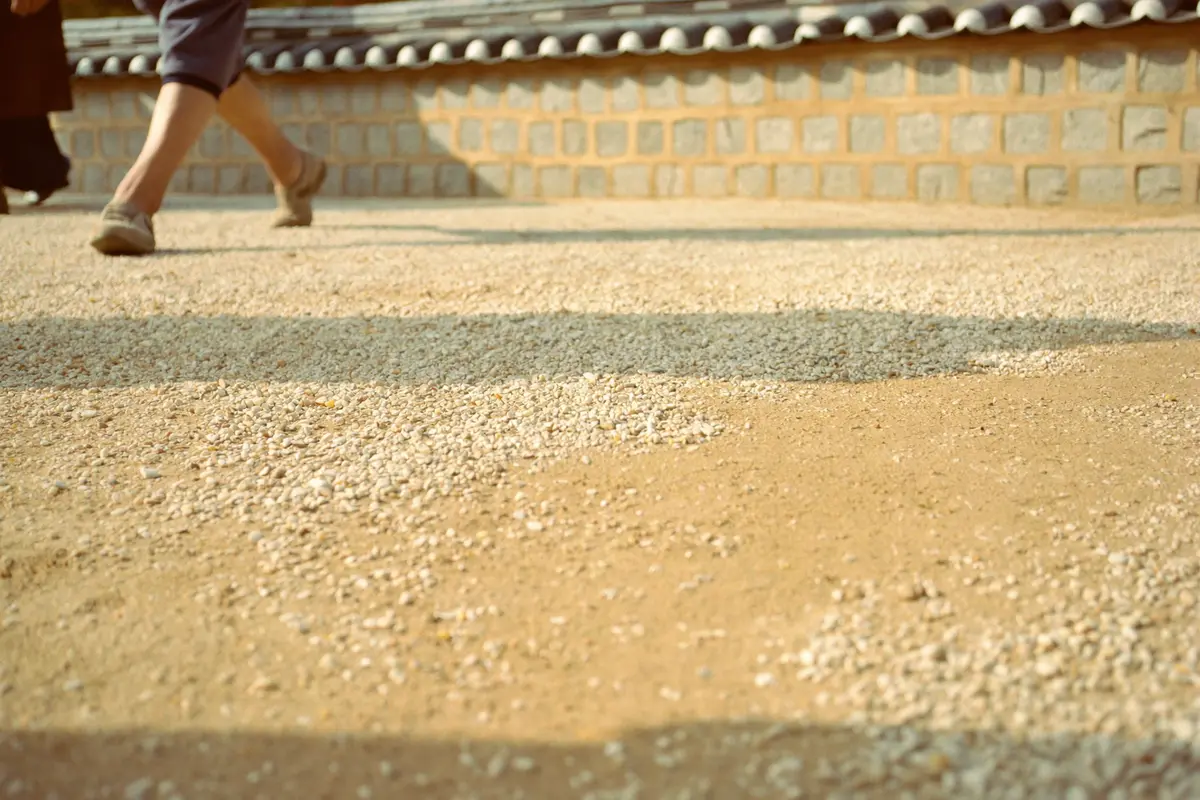
Gyeongbokgung Palace is one of the first places people take their parents. It is flat with no hills, so the walking itself is not hard, but the wide courtyards and paths are covered in earth, fine gravel and uneven stones. Feet get tired over time, and wheelchair or pushchair wheels roll heavily. The palace is very large, so decide in advance to see just a few of the main halls near the front gate. There is not much shade, so bring a hat and water in summer and warm clothes in winter. The nearest subway station is Gyeongbokgung Station on Line 3.
- Closed → every Tuesday. If a Tuesday is a public holiday, it opens and closes on the next day that is not a holiday instead
- Opening hours → Nov–Feb 09:00–17:00, Mar–May and Sep–Oct 09:00–18:00, Jun–Aug 09:00–18:30. Last entry one hour before closing
- Admission → 3,000 won for adults
- Free entry → people aged 65 and over enter free, foreigners included. Bring their passports to show their age. Wearing hanbok also gets you in free
- Enquiries → Gyeongbokgung Palace office 02-3700-3900, Royal Palaces and Tombs website (royal.khs.go.kr)
On a Tuesday, go to another palace. Changdeokgung, Deoksugung and Changgyeonggung close on Mondays and are open on Tuesdays. Deoksugung is right in front of City Hall Station, so it is easy to reach, and it is smaller than Gyeongbokgung, so there is less walking. Free entry for foreigners aged 65 and over applies at these palaces too. The Secret Garden (Huwon) at Changdeokgung is different: it needs a separate ticket with its own free-entry rules, so people over 65 still need a ticket there.
Rainy or cold days: the National Museum of Korea
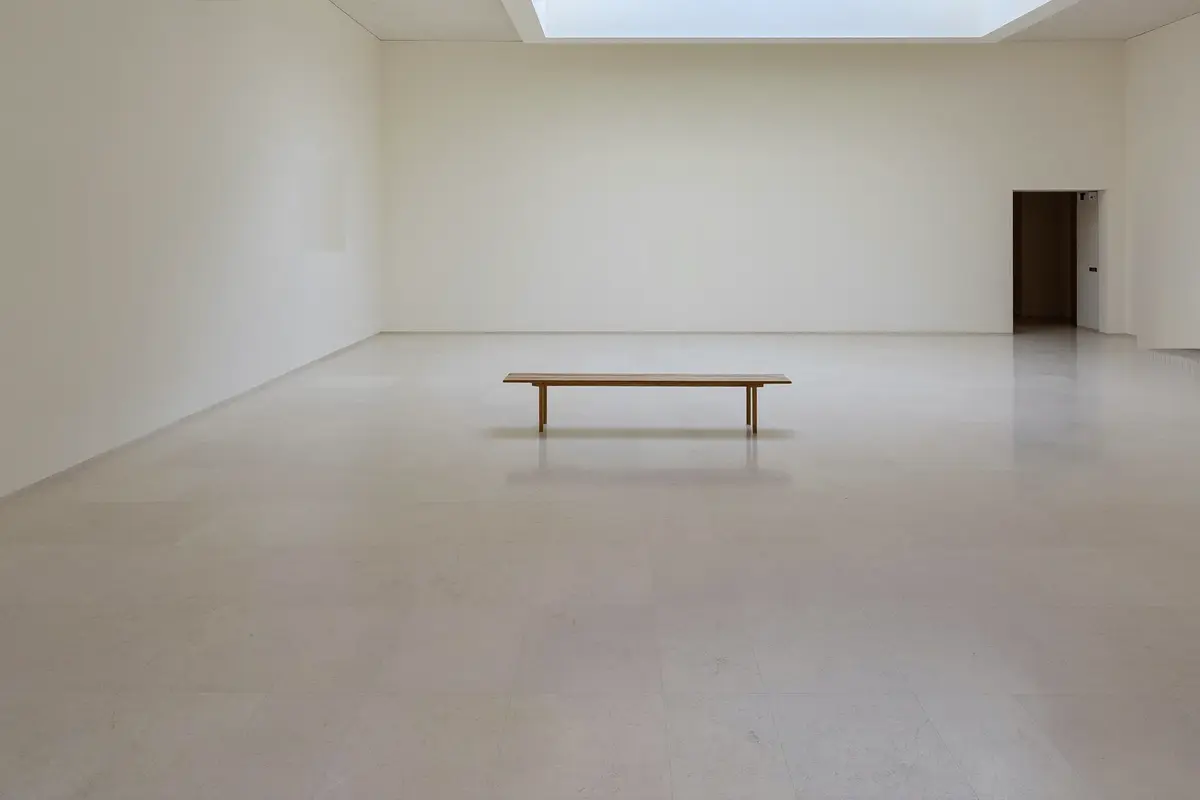
When the weather is bad, indoors is better. The National Museum of Korea is in Yongsan, within walking distance of Ichon Station (Line 4 and the Gyeongui–Jungang Line). The building is large and flat inside, so the weather does not matter, and as of November 2026 the permanent exhibitions are free (charging for entry is being discussed, so check again closer to your visit). It closes on 1 January, Seollal, Chuseok and other days the museum sets. Opening hours vary by day and season, so check the website (museum.go.kr).
- Do not try to see it all → it is huge, so pick one floor and one or two galleries and leave the rest for another time
- Sit often → rest on the benches between galleries as you go
- Wheelchairs and pushchairs → ask at the information desk when you arrive whether you can borrow one
- Meals → there are restaurants and cafés inside, so they can rest without going back out
Seeing Seoul without much walking: riverside paths
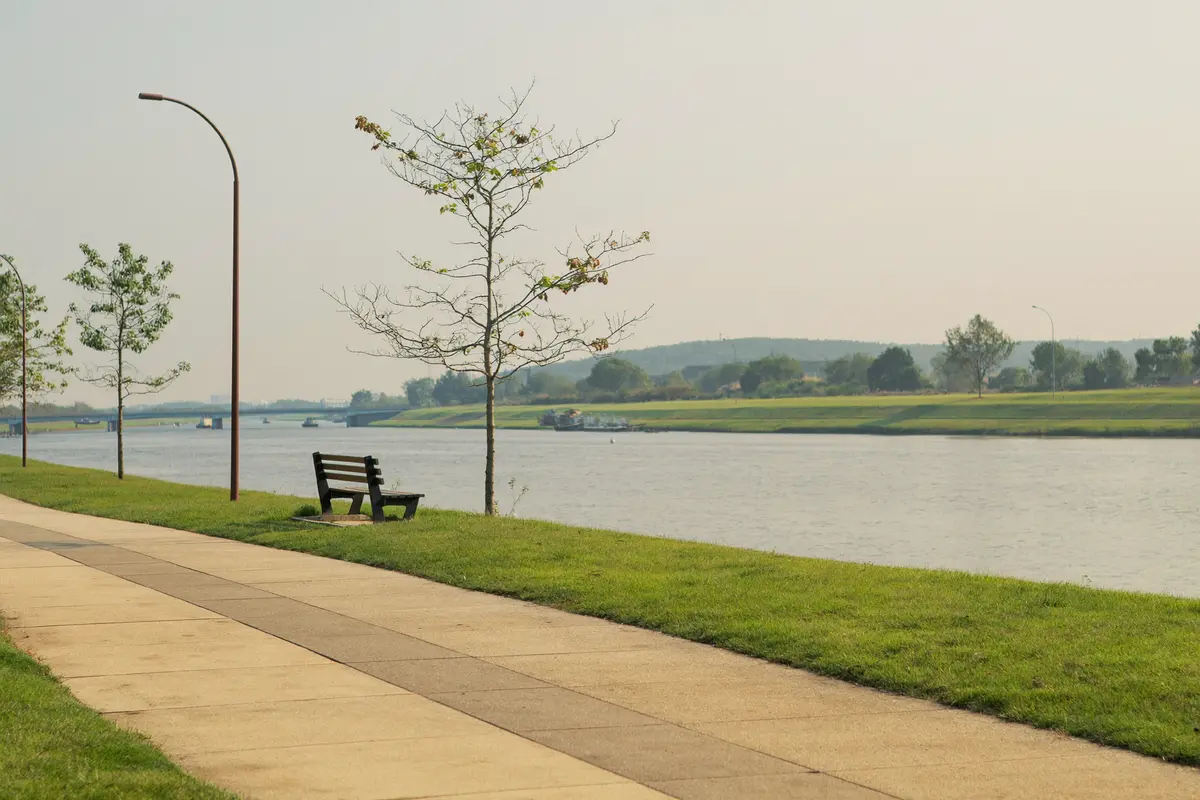
For parents who find walking hard, a flat path is better than old buildings. The Hangang (Han River) parks have wide, flat paths along the river with benches here and there, perfect for a short walk, a sit by the water and a slow walk back. Cheonggyecheon stream in the city centre also has a flat path along the water. In both places, though, many entrances down to the path are stairs, so find an entrance with a ramp or lift on a map app before you go.
- Around sunset → cooler than midday, and they can sit and watch the sun go down over the river
- Something to sit on → a small mat or cushion lets them rest on the grass too
- Facilities → the Hangang parks have toilets and convenience stores dotted along them
- In winter → the wind off the river is cold, so keep it short
When language gets in the way: the 1330 travel hotline
In case your parents get lost or cannot make themselves understood while on their own, tell them about 1330. It is the Korea Travel Hotline run by the Korea Tourism Organization, which helps with travel information and interpreting over the phone. It runs 24 hours a day, all year, in Korean, English, Japanese, Chinese, Russian, Vietnamese, Thai and Malay/Indonesian. Russian, Vietnamese, Thai and Malay/Indonesian are available only from 8 a.m. to 7 p.m. (as listed by several local government sites in November 2026). From a Korean mobile, dial 1330; from a phone with a foreign number, dial +82-2-1330.
- Hotel address → write the address in Korean on a piece of paper and put it in their wallet. They can show it to a taxi driver
- Your number → save your Korean number in their phone and write it on paper too
- Translation app → install an app that translates text from a photo and have them try it once before the trip
- In an emergency → 119 (ambulance and fire) and 112 (police). Our post on emergency numbers covers these in detail
What to eat
- Spicy food → many dishes contain chilli powder or chilli paste even when they do not look spicy. Show the phrase below when you order
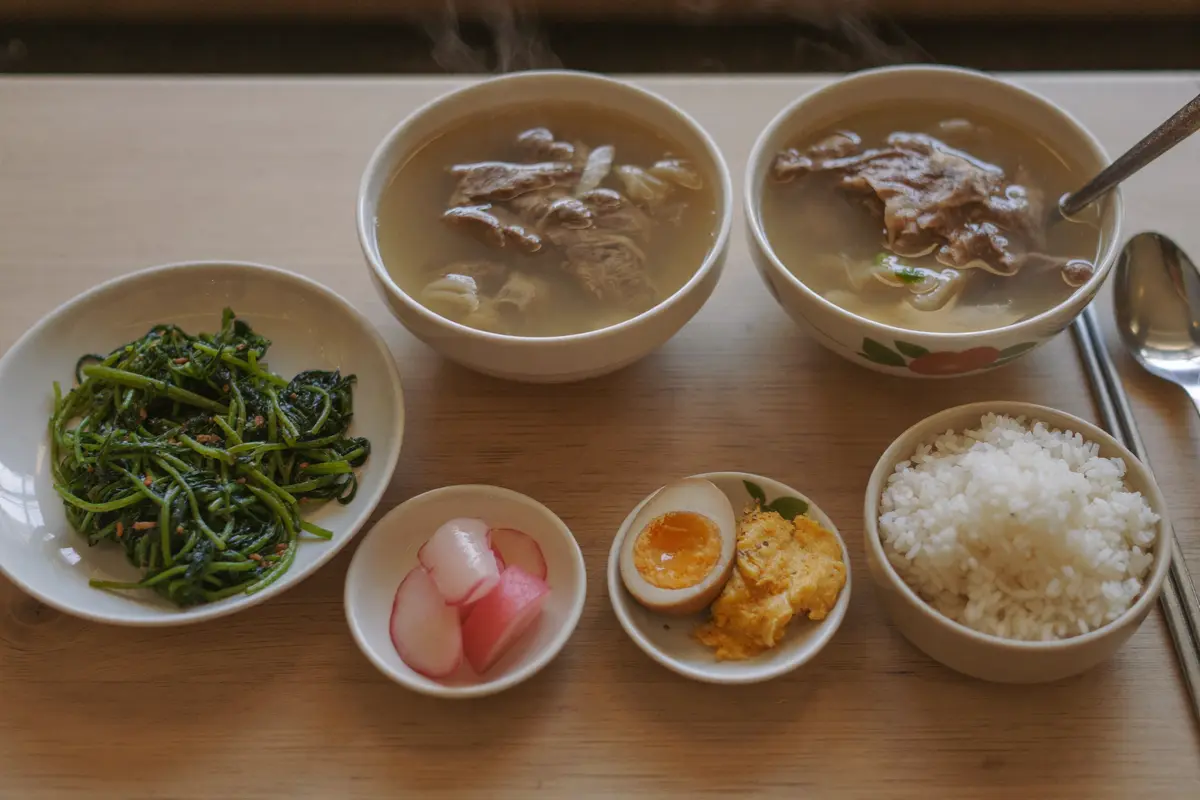
- Mild dishes → clear soups such as seolleongtang, gomtang and galbitang, bulgogi and rice porridge (juk). For bibimbap, ask for the chilli paste on the side
- Halal and vegetarian → many dishes use meat stock or fermented seafood, which you cannot tell from the menu name. Ask the restaurant in advance
- Seating → restaurants where you sit on the floor can be hard on the knees. Check first whether they have tables and chairs
맵지 않게 해 주세요. 고춧가루는 빼 주세요.
It comes up in the interview too
The places you show your parents also come up in the naturalization interview. Here are examples from the practice questions we compiled. The interview is in Korean.
대한민국의 수도는 어디입니까? — 서울특별시
서울을 가로지르는 강은 무엇입니까? — 한강
광화문 뒤에 있는 서울의 대표 조선 궁궐은 무엇입니까? — 경복궁
오늘날 서울에 해당하는 조선의 수도 이름은 무엇입니까? — 한양
Explaining the palace to your parents is a good way to make these answers stick. Our service lets you hear questions like these in the interviewer's voice and practise answering out loud.
This guide is based on official information checked in November 2026. Opening hours, fees, closing days and the 1330 service hours may change, so please confirm with each place before you go.