

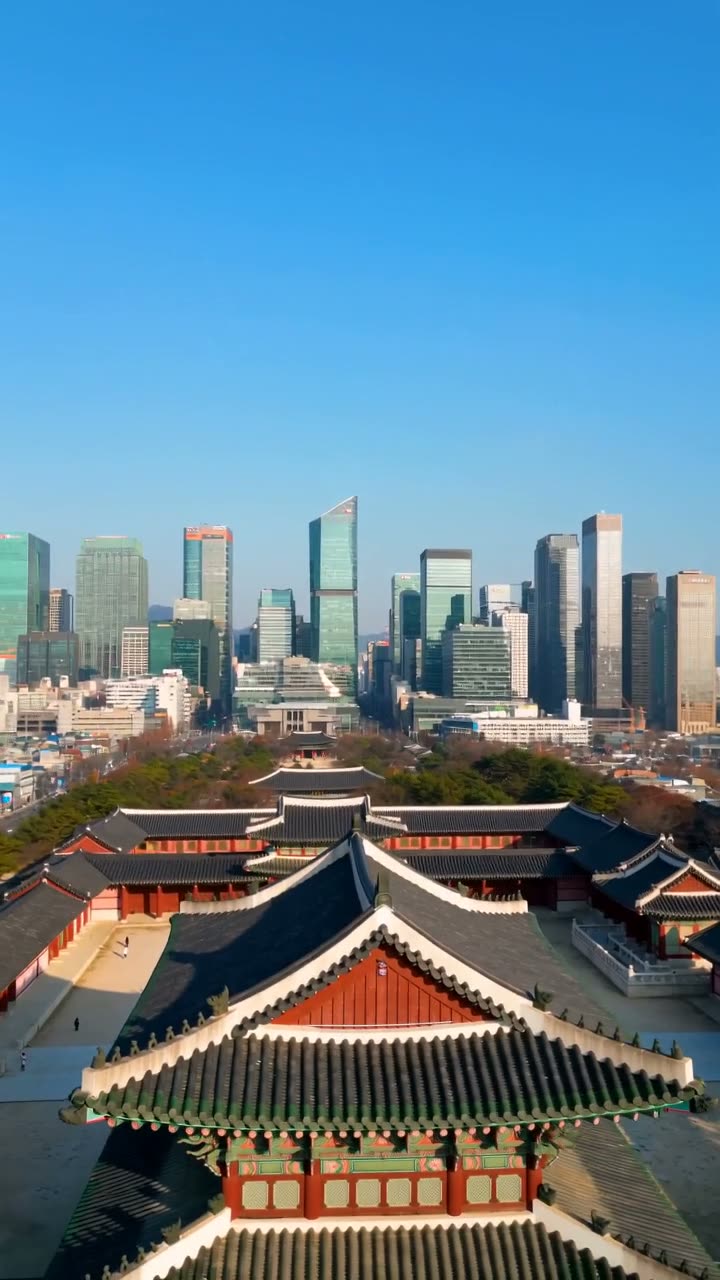
Korean Naturalization Interview
Now I’mKorean, too!
Practise in the same order as the real exam, whenever you want, as many times as you want. You hear each question in a human voice, answer out loud, and find out straight away.
- 928
- practice questions
- 8
- languages
- 4
- interview stages
The 928 questions include the same answer asked in different ways. Counted by answers, there are 580.

In the interview room
When the door closes,you sit there alone
No interpreter, no dictionary. You listen to the examiner and answer in Korean. This is where you get ready for those ten-odd minutes.
Listen, answer out loud, get scored on the spot
Instead of describing it, here is the screen itself. The question and the voice below are the ones you meet in practice. The real interview is run by a male interviewer in his forties or fifties, so a voice actor of the same age reads at a similar pace — not a synthesized voice.
The real practice screen
대한민국의 수도는 어디입니까?
What is the capital of the Republic of Korea?
It is Seoul.
Press to answer
What we hear 서울
That's correct.
- 1
The interviewer asks
The question is read aloud. You can hear it one more time.
- 2
You answer out loud
Press the mic and speak — what we heard appears on screen. You can type instead.
- 3
Scored on the spot
You find out right away whether you were right and whether you spoke clearly. The answer is read aloud too.
- 4
Stuck? Turn the help on
Keywords, translation and explanation are attached to every question. The translation appears in the language you are reading.

Four stages, one at a time
Practice in the same order as the real exam. Once you know which stage trips you up, preparing gets much easier.
 1
1Basic questions
It opens with simple confirmations like your name and address. This stage is there to settle your nerves.
 2
2Reading
You read a passage out loud. Then the examiner asks you about what you just read.
 3
3Questions
The examiner reads each question aloud. Nearly all of them take a short answer.
 4
4National anthem
You sing the first verse of the Korean national anthem. You can practice with the lyrics on screen.
Guidance in your language, questions in Korean
Explanations and instructions appear in your own language. But the exam questions and passages stay in Korean, exactly as written. Those are the sentences you'll meet on the day.
Naturalization in numbers
The latest figures from the Korean Ministry of Justice statistical yearbook. More than ten thousand people become Korean citizens every year — and the number is climbing again.
11,344 people
Naturalized in 2025
+3.1% vs last year
3 yrs
Consecutive growth
80%
From China and Vietnam
51%
Through marriage
Naturalizations by year
One dip in 2022 — rising every year since.
Where they came from in 2025
11,344
2025 · total
People from many more countries became Korean citizens as well.
Five years, country by country
Tap a year and the bars move to that year.
By continent
Permits granted in 2025. Nearly all came from Asia.
Naturalization through marriage
About half of all naturalizations come through marriage. The trend differs sharply by country.
- Thailand213+227.7%
- Taiwan193+70.8%
- Uzbekistan78+69.6%
- Philippines326+53.1%
- Cambodia348+37%
- China1,874+20.9%
- Mongolia660%
- Vietnam2,302-40.2%
People from many more countries became Korean citizens as well.
The next name behind these numbers could be yours. The interview is something you can practice for.
View as table
| Country | 2021 | 2022 | 2023 | 2024 | 2025 | % |
|---|---|---|---|---|---|---|
| Total | 10,895 | 10,248 | 10,346 | 11,008 | 11,344 | 100% |
| China | 5,145 | 4,480 | 4,904 | 6,249 | 6,420 | 56.6% |
| Vietnam | 4,225 | 4,431 | 3,807 | 2,951 | 2,658 | 23.4% |
| Taiwan | 404 | 248 | 383 | 367 | 468 | 4.1% |
| Cambodia | 263 | 258 | 321 | 307 | 360 | 3.2% |
| Philippines | 241 | 203 | 243 | 284 | 357 | 3.1% |
| Thailand | 78 | 89 | 110 | 148 | 248 | 2.2% |
| Uzbekistan | 97 | 119 | 113 | 107 | 135 | 1.2% |
| Mongolia | 103 | 60 | 126 | 81 | 111 | 1% |
| Other | 339 | 360 | 339 | 514 | 587 | 5.2% |
| Country | 2021 | 2022 | 2023 | 2024 | 2025 | vs 2021 |
|---|---|---|---|---|---|---|
| Total | 6,345 | 6,809 | 6,431 | 5,583 | 5,787 | |
| Vietnam | 3,850 | 4,209 | 3,528 | 2,586 | 2,302 | -40.2% |
| China | 1,550 | 1,666 | 1,762 | 1,692 | 1,874 | +20.9% |
| Cambodia | 254 | 250 | 316 | 296 | 348 | +37% |
| Philippines | 213 | 181 | 213 | 259 | 326 | +53.1% |
| Thailand | 65 | 71 | 89 | 124 | 213 | +227.7% |
| Taiwan | 113 | 119 | 167 | 166 | 193 | +70.8% |
| Uzbekistan | 46 | 66 | 64 | 64 | 78 | +69.6% |
| Mongolia | 66 | 45 | 80 | 62 | 66 | 0% |
| Other | 188 | 202 | 212 | 334 | 387 | +105.9% |
Official statistics of granted naturalizations (citizenship acquired) — not interview applicant counts or pass rates.
Source: Korea Immigration Service, Ministry of Justice, 2025 Yearbook of Korea Immigration Statistics, pp.66–68.
TOPIK study
TOPIK levels 1 and 2, right here
Prepare for the Korean proficiency test in the same place as your interview practice: vocabulary and grammar by unit, listening and reading questions, and a full-size mock test.
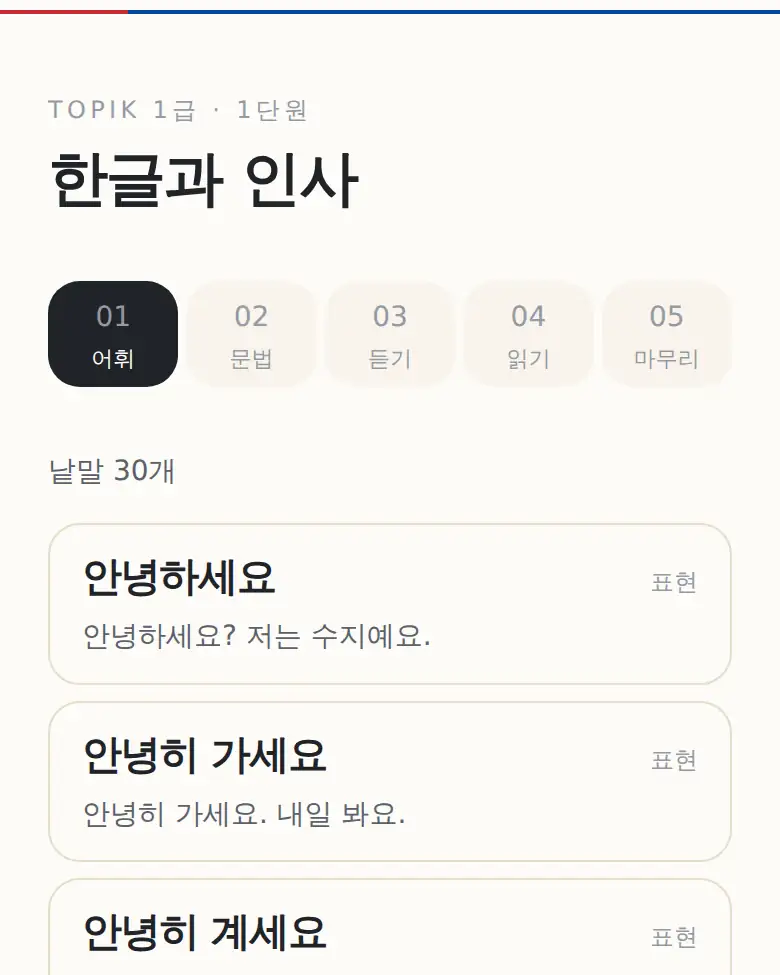
Vocabulary cards
Word, part of speech and example first; tap for the meaning.
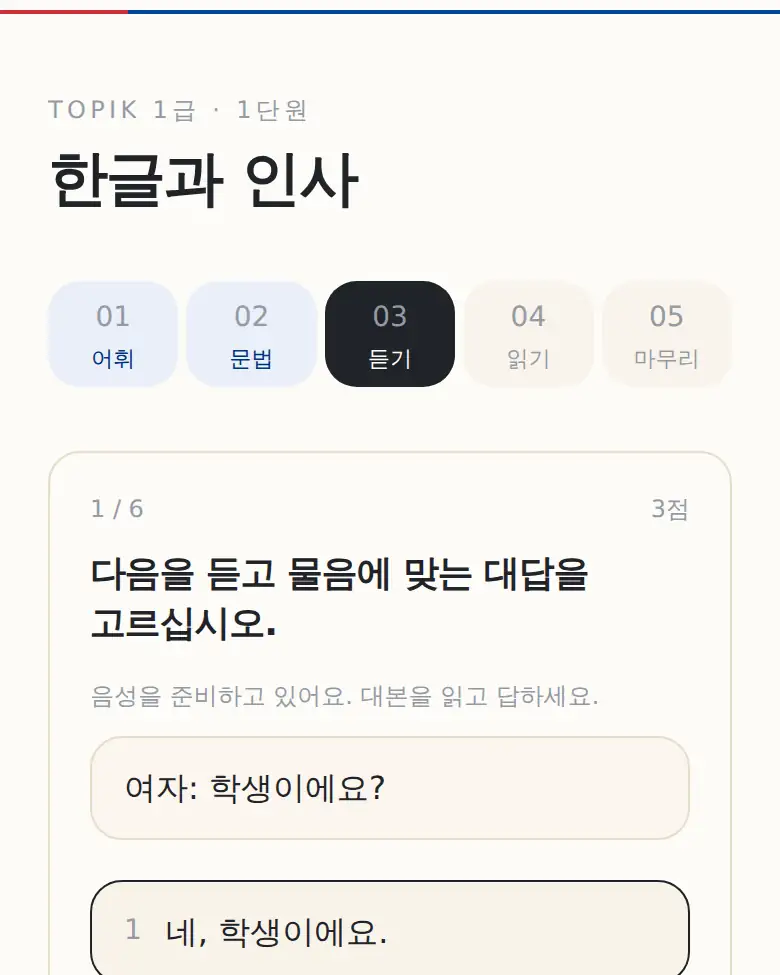
Question check
Choose, and it tells you right away with an explanation.
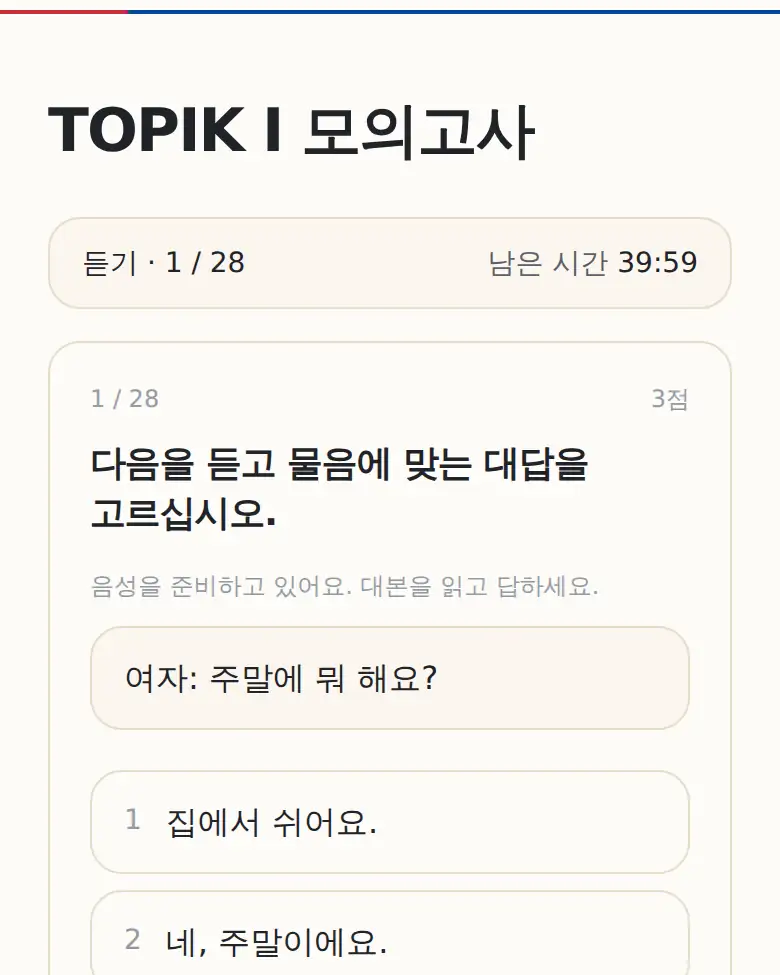
Mock exam
30 listening + 40 reading questions, on the real clock.
Get ready for your new start in Korea
Sign up and start right away — practise whenever you want.
Start free